
"Earning a living"
Losing beauty

Humans are the only species that pay to live on this planet. Because of this, we have seen a rapid decrease in beauty and a rapid increase in commodification. The reasons that we create now are more often than not skewed towards a means to and end, rather than a means to begin.
As I stroll through the temples, tombs and areas Luxor, Egypt, the sheer beauty and magnificence of the architecture, intricacy of the carvings and meaning within the symbols and Kemetic language is absolutely stunning. (Kemet was the word for Ancient Egypt in their language, which meant Black Land, named for the color of the fertile soil around the Nile River).
In some of these temples, the carvings and stonework are so precise and crisp that they look like they could’ve been chiseled only yesterday. And this was over 2000 years ago! And these temples and tombs are often dedicated to the gods and goddesses who represent energies of life.
One of the temples, dedicated to Hathor, for example, who represents many aspects of the divine mother (cosmically and in anthropocentric terms) embodies the energy of creation and love and sustenance. This temple is absolutely magnificent and awe-inspiring. It is a symbolic and physical representation of the dedication and devotion to the Mother that is unmatched by anything that I’ve seen in architecture.
That being said, Hathor also can her other switch quickly into the leonine goddess, Sekhmet, whose name means “She who is Powerful”. In her guise of Sekhmet, Hathor often had to bring the destructive aspects of creation to humankind ultimately to transform their relationship with the divine and reconnection to Life.
If we look at climate change, ecocide, the destruction of biocultural heritage, the commodification of the human spirit, are these not the destructive aspects of creation? Are these not extremely loud signs and signals to begin to (re)transform our relationship with the divine energies of Life?
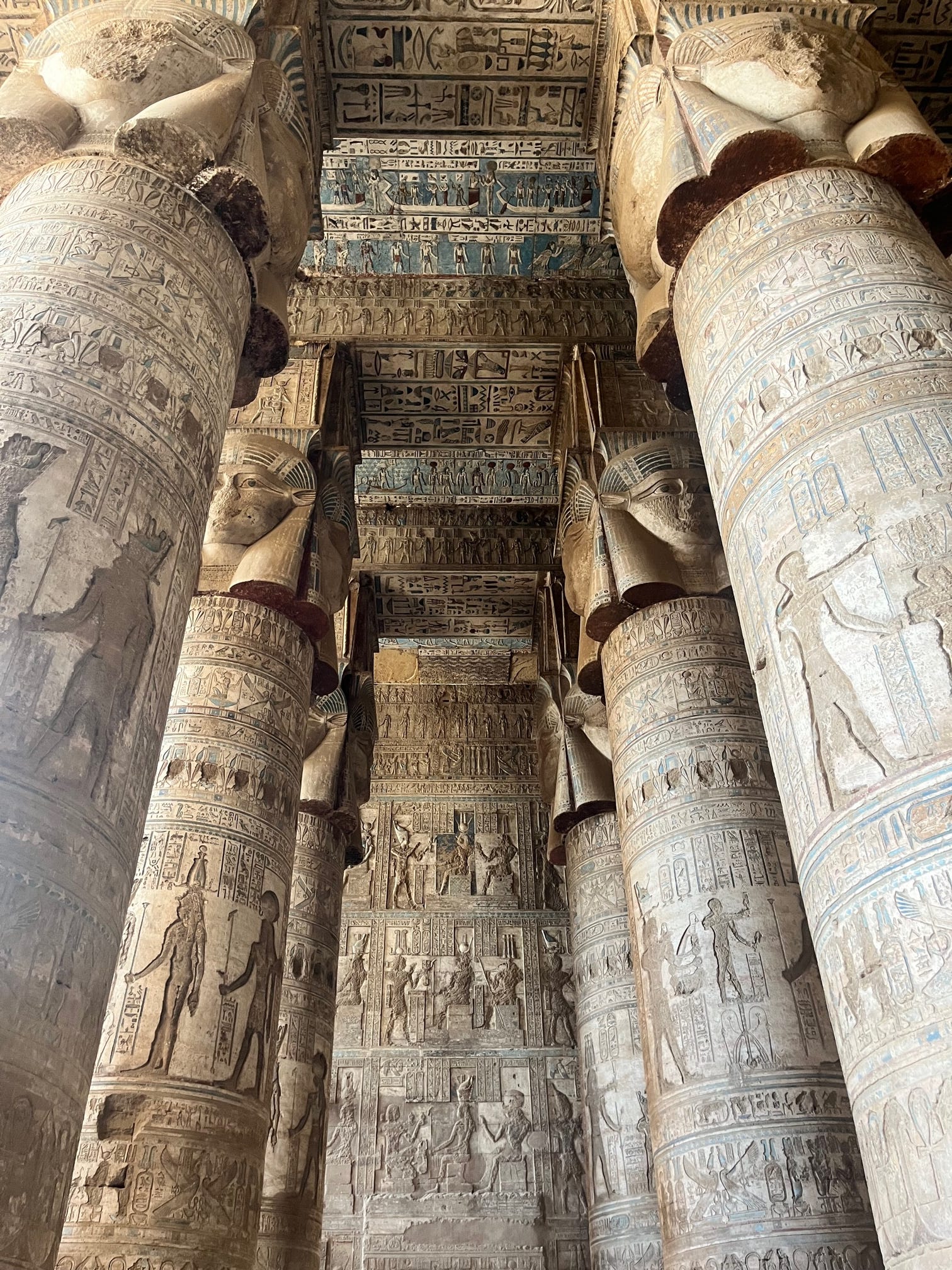
Where has our capacity for beauty went? For intricacy? For worship? For connection with anything that would even mirror close to the dedication and devotion that went into these temples? It certainly isn’t in mass-manufactured goods from China or IKEA. It’s not in the new startups looking to focus on sports betting amidst climate collapse. It’s not in the escape-the-matrix new age crowds. So, where did it go? Where did we lose our ability to worship that which keeps us alive, without which we would not be here? How are we still taking this for granted?
Has our lack of ability to worship directly correlated with our single-handed destruction of the natural world, the Mother of us all?
The word worship gets a bad rap because of Christianity. No one wants to sit in a pew and call out to an impersonal god in whose name the most atrocious crimes against humanity have been conducted. But, the word ‘worship’ itself comes from the Old English word weorþscipe, which is etymologically derived from a meaning of worthiness, or worth-ship. The ability to worship shows our own worthiness, because worthiness is the humility to be constantly receiving the gift of life and NOT take it for granted. If you take something for granted you are not truly receiving it. Our inability to worship shows us that we have stopped being able to receive and revel in the wondrous nature of the gifts of life, and, concurrently, we are unable to receive our own gifts in the process.
This remembering process is not one of concept, as Stephen Jenkinson told me. The opposite of remembering is not forgetting, it is dismembering. And we are dismembered as a collective. Remembering is an active process to come back into beauty. Beauty is based in connection. A giving and receiving. Not a giving and taking. Beauty is a way of life, it is a way of creating, of noticing the subtleties, of taking a step out of your own melodrama to receive the absolute blessing of wind on a hot day, of delicious home-cooked food made with love, of crisp and clean water, of sunlight on your face. To literally, stop and smell the flowers, and give them your appreciation by acknowledging their beauty. And to know that the flower your admiring is not so different than yourself, as we’re both here on this planet, breathing in each other’s breath, sharing time in the sun.
In (re)memberance of beauty,
R